


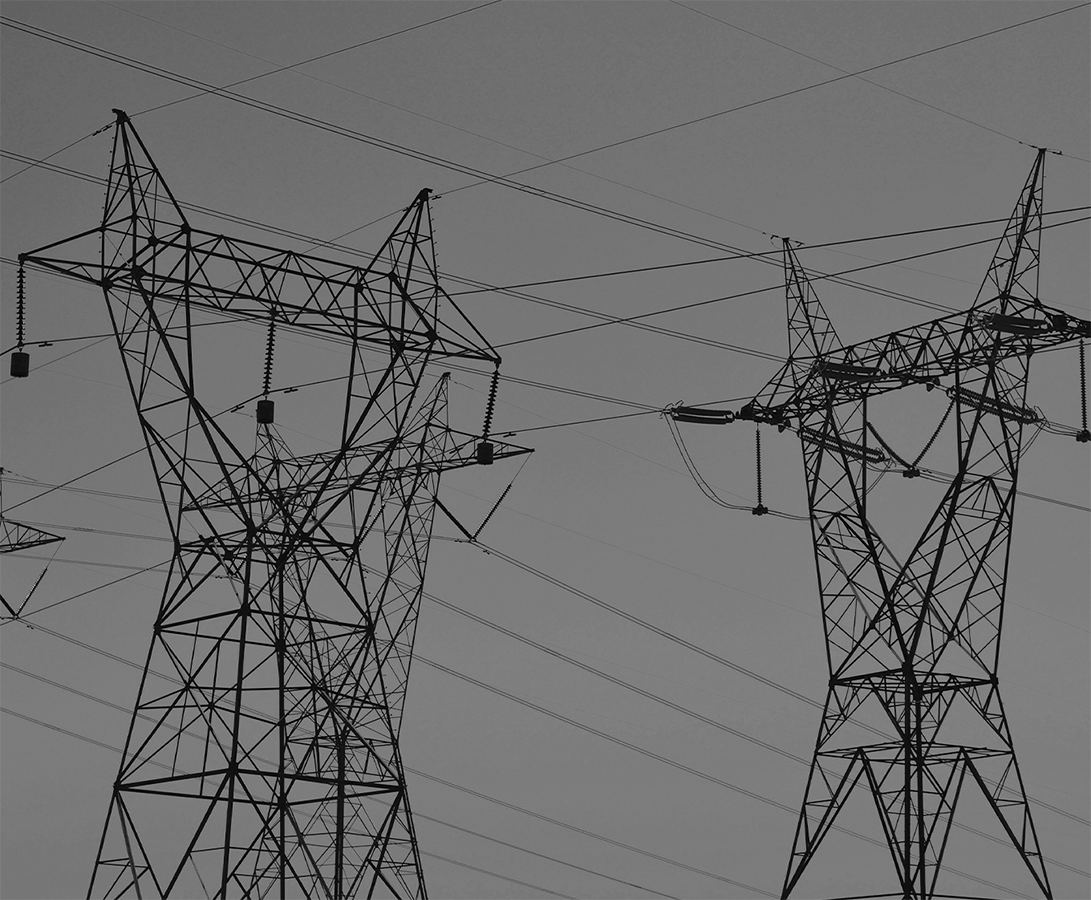
Risk management in electrical grids under NIS2 is the bridge between what the regulation requires on paper and what the business can actually operate without stopping the clock of the power system.
In energy, risk is not just about data confidentiality: it is about service continuity, integrity of control signals, coordination between actors and, in many cases, regulated incident response with specific deadlines and supervisory expectations.
Directive (EU) 2022/2555 reinforces that cybersecurity is not an IT add-on, but a governance function with risk-proportionate measures, incident management and clear rules for the digital supply chain. In electricity, that logic collides with OT realities, real-time constraints, geographically dispersed assets and vendors with permanent remote access. That is why a “generic risk matrix” tends to fail: scenarios must be translated into the language of the substation, the power plant, the market and the dispatch centre.
Transposition Status in Spain: What You Need to Know Today
A pending transposition does not exempt organisations from reputational, contractual or continuity risks. Reference bodies, INCIBE-CERT and the CCN-CERT agree that the technical measures the directive requires take months to implement and waiting for the BOE is not a viable strategy.
Why the Electricity Sector Is Nothing Like a Classic Office Environment
A modern electrical grid combines corporate systems, market platforms, EMS/SCADA, distribution management systems, remote control, smart metering and an increasing number of distributed resources, each with different operating rules. That mosaic creates specific realities that standard risk analysis fails to capture:
Cyber-physical interdependence. A logical failure can precede a physical impact, switching commands or poorly coordinated protections, long before a SOC detects malware on conventional endpoints.
Demanding time horizons. What is a “weekend maintenance window” in an office can be a “window that only exists with third-party coordination and operational security rules” on the grid.
Heterogeneous attack surface. The technology landscape of a generation company is fundamentally different from that of a distribution operator with thousands of field points, or a purely digital flexibility aggregator.
Useful risk management organises these realities: domain owners, tolerance thresholds explainable to management, and audit trails that hold up in conversations with internal auditors, client auditors or supervisors.
Which Parts of the NIS2 Framework Matter Most in Electricity Practice
Directive (EU) 2022/2555 does not replace electrical engineering; it overlays minimum organisational obligations that must coexist with already mature national sector regulation. Article 21 establishes the core cybersecurity risk management measures, which translate into everyday executive responsibilities:
- Coherent governance and policies across IT, OT and the regulated business, not a collection of disconnected PDFs.
- Risk analysis and measures proportionate to plausible impact, including cyber-physical scenarios.
- Incident management with tiered notification deadlines: early warning within 24 hours, formal notification within 72 hours and a final report within one month, per the INCIBE-CERT procedure.
- Vendor management and contractual review of access rights, patching SLAs and remote support boundaries.
- Direct liability of the management body: senior management is accountable for non-compliance and may face personal liability, temporary bans from office and administrative fines, per the Spanish draft law.
The technical guidance published by ENISA acts as a compass for aligning practices and shared vocabulary when the plan has to survive reviews by people unfamiliar with your internal substation acronyms.
Who Is Obligated? Scope of Application in Electricity
Annex I of the directive classifies the electricity sector as a highly critical sector. Entities in scope include, among others, electricity undertakings, distribution system operators, transmission system operators, producers, designated electricity market operators, and providers of energy aggregation or storage services.
In general, NIS2 applies to medium and large enterprises in these sectors (more than 50 employees or more than €10 million in turnover). Smaller entities can also be included if the Member State designates them as essential or important, or if they play a critical role in the supply chain.
Do not assume you fall outside scope based on size alone without a specific analysis. The criteria are functional: what matters is the type of service and the role in the critical chain, not just headcount.
Electricity Value Chain Segments: Risk Changes with the Role
It is not reasonable to model risk the same way for generation, transmission, distribution, retail supply or ancillary services. Even though they share the same regulation, the dependency map and the blast radius differ substantially.
Generation and flexibility. The focus blends process control, market interfaces, telemetry and physical site protection. The risk is not just stopping a turbine: it is triggering contractual non-compliance with operating programmes or ancillary service forecasts.
Transmission. The key word is scale and regional coordination: an incident can trigger cascading decisions and data interoperability expectations across operators. Risk management must reflect coordination roles and liability boundaries with third parties, including coordination with ACER when the impact may have cross-border reach.
Distribution. Wide geographic dispersion, extensive field equipment, heterogeneous obsolescence and digitalisation projects that open new interfaces. Risk escalates when inventories fail to distinguish “critical for continuity” from “annoying for inventory”.
Retail and digital customer services. In smart billing, remote management or contract-action portals, reputational and legal damage can escalate rapidly, what looks like “just customer data” rarely stays that way.
Asset Inventory and Dependencies: Without a Reliable Map, Risk Analysis Is Management Theatre
Before “mitigating” anything, you need a live inventory that answers, at a minimum, these questions per relevant asset:
- Physical or regulatory function it supports.
- Technology domain (corporate IT, remote control, SCADA/DCS, field tools).
- Ownership and support: internal, integrator or OEM.
- Rate of change, because an established asset without an effective owner tends to be exploited precisely when a rushed replacement project begins.
This work does not need to be endless if brutal prioritisation is applied: coverage expands each quarter, but from day one you document the extreme paths that could compromise effective capacity, not a hundred pages with no action attached.
OT, IT and the “Bridge” Too Many Organisations Underestimate
The electricity sector continues to seriously debate the balance between isolation and operability. Practical rules that work better than slogans:
- Segmentation with reviewable policies when engineering changes, not when “someone leaves a mislabelled cable at the substation”.
- Identity management for external support as a named credential with a time window and consolidated log, not permanent users called vendor/service.
- Inventories of industrial ports and protocols, even as a first step using controlled scans with agreed windows to avoid causing the very outage you are trying to prevent.
Where the baseline model is ISO/IEC 27001, the ISMS provides a cadence for risk review, defined roles and a Plan-Do-Check-Act cycle. The cross-cutting work is mapping those controls onto OT diagrams and electrical function classifications, not repeating generic “revised corporate policy” text. For the energy sector, the ISO/IEC 27019 extension adds controls specifically for process control systems, remote control, dispatch and electrical plant operations.
Typical Risk Scenarios: Beyond Ransomware on the Office Layer
Poorly managed integrator access. Well-intentioned support entering via shared VPNs or poorly monitored single bastion hosts. The risk is not just a stolen account; it is an action executed in a window where the process tolerates only minutes of confusion.
OT firmware and patch update chain. Patching without testing can break equipment certification; not patching leaves known vulnerabilities open. The risk analysis must document the decision and compensating controls, not defer the conversation to “we’ll look at it next year”.
Corrupted or stale telemetry data. In electricity, temporal coherence and measurement consistency matter as much as confidentiality. An integrity attack can be as damaging as encryption if it generates an incorrect command after insufficient validation.
Combined physical incidents. Metal theft, vandalism, severe weather: these are not “SOC failures”, but they can increase the conditional probability of human error. A mature management plan mentions these links without trivialising them.
Digital Supply Chain: Where the Lawyer and the Engineer Must Agree
Article 21 of Directive (EU) 2022/2555 explicitly includes supply chain security as a mandatory measure. In practice, this defines who can access systems, with what time window, how support ends in the event of disputes and how auditability is guaranteed.
Minimum contractual checklist that rapidly improves the risk profile:
- Clauses on remote access with account control, MFA where reasonable and an effective ban on anonymous shared access.
- Documented change management that crosses IT and OT where they share physical dependency.
- Contingency plans when critical hardware comes from geopolitically sensitive origins.
- Vendor records with evidence of access review at least annually or following contract replacement.
In electricity, the dependency on manufacturers with embedded software licences or service keys is a continuity risk that cuts across NIS2: the directive requires evidence of proportionate management, so the risk analysis must surface the economic margin and executive priority involved.
Incident Management and Notification: Better to Prepare Internal Lines Than Improvise Communication
NIS2 establishes a tiered mandatory notification system for significant incidents:
| Deadline | What is notified |
|---|---|
| 24 hours | Early warning to the reference CSIRT (INCIBE-CERT for the private sector) |
| 72 hours | Formal notification with initial assessment of severity, impact and indicators of compromise |
| 1 month | Final report with full analysis |
Source: INCIBE-CERT, NIS2: What You Need to Know
What management typically needs in the heat of an incident:
- Who is in command from second zero until institutional communication kicks in.
- What data is confirmed versus inferred, conflating both before a regulator usually increases the initial perception of opacity, even when the intention is the opposite.
- What service continuity is sacrificed to contain damage in OT domains where failure latency is non-linear.
The cost of not preparing this is not just a fine: it is loss of commercial trust with major industrial clients whose contracts already require demonstrating a credible incident posture.
Penalty Framework: What Is at Stake
The Spanish draft law reflects the sanctioning regime set out in the directive:
- Essential entities: up to €10 million or 2% of global annual turnover, whichever is higher.
- Important entities: up to €7 million or 1.4% of global annual turnover.
- Personal liability for management: fines of up to €500,000 and temporary bans from holding office.
In Member States with early transposition, the first NIS2 sanctions are already being published. Spain, with its transposition still pending, has not yet issued formal penalties, but INCIBE-CERT inspections are already under way.
Internal Risk Audit: Recommended Rhythm and Typical Pitfalls
A common mistake is conflating technical vulnerability audits with management risk assessments.
Quick exercise (quarterly or monthly): Minimum-metric dashboards for management: MFA coverage on remote vendor accounts, average time to review the OT map, ratio of projects where the accepted residual risk has an owner and a review-by date versus the typical “accepted forever”.
Annual exercise: A hybrid incident simulation combining telemetry loss at a critical point and fictional parallel regulatory pressure over ninety minutes.
Pitfalls to avoid: conflating “we haven’t been attacked yet” with “genuinely low probability”; extrapolating benchmarks from other sectors without translating them into actual lost voltage on the grid.
Data, Privacy and Market Layers: Do Not Disconnect “Regulated” Risk from “Customer” Risk
A significant part of the modern electricity business depends on data exchange with industrial customers, retail suppliers, aggregation platforms and digital services that mix personal data with operational data. NIS2 risk analysis does not replace GDPR compliance, but it does require that internal conversations not be siloed beyond reach.
Practices that reduce friction:
- Classify which datasets feed grid decisions versus commercial decisions; the same dataset mislabelled can produce misaligned controls and inconsistent retention.
- Define what happens when an incident affects mass telemetry versus billing data: the reputational containment strategy is not the same.
- Document vendors that concentrate processing (cloud, SOC, analytics) with effective contractual clauses, not paper filed away.
IT–OT Coordination Without Turning Meetings Into Functional Blockades
Where large projects connect new OT layers but depend on corporate IAM or physical asset databases managed by GIS, a new source of poorly managed executive tension appears. Three simple elements improve friction proportionately:
- An explicit “cross-domain risk owner” with documented temporary veto capability, not a decorative committee.
- A minimum project delivery checklist that requires an exception log if a new cross-layer interface is opened without isolation proof equivalent to the baseline design.
- A brief quarterly incident simulation limited to the market data layer, without touching OT, to observe how the regulated business reacts to artificially induced volatility.
Controls and Evidence: How to Explain the Programme to an Auditor
Auditors are not looking for theatre; they are looking for consistency between:
- The risk tolerance policy approved by management.
- Incident records and lessons learned with an owner and a date.
- Vendor records with evidence of access review at least annually or following contract replacement.
Where ISO/IEC 27001 already provides the skeleton, the cross-cutting work is mapping controls to electrical functions and eliminating “ghost controls” that nobody on the plant floor recognises. The ENISA Technical Implementation Guidance for NIS2 provides evidence examples and mappings to international standards that make this work considerably easier.
How PrivaLex Fits In
PrivaLex is a consultancy specialised in certifications, regulatory compliance and data protection, not a generic law firm. We support compliance officers, CISOs, operations management and legal teams in translating European frameworks into measurable controls and audit relationships that hold up in boardroom conversations.
In cybersecurity and continuity projects in regulated sectors we integrate: NIS2, DORA where the group has coupled financial activity, ENS for contexts interacting with public administration, ISO 27001 / ISO 27701 for ISMS and operational privacy, SOC 2 reports when contracts require them, and AI Act / ISO 42001 where automated decisions are involved in optimisation or assisted trading. Team training and initial gap assessments are part of the same approach: making compliance sustainable, not an isolated formality.
If you want to build a practical electricity-NIS2 risk plan with actionable priorities, start with a no-cost risk assessment and, when the time comes to align scope and timeline with management, book a strategic session with the team.
Frequently Asked Questions (FAQs)
Can the electricity risk analysis be the same as the corporate IT one?
The methodology can share a common base, but scenarios, tolerable impact timescales and decision roles during incidents diverge substantially. A superficial merger typically produces incomplete executive records and frustration in engineering teams.
What role do DER and distributed digitalisation play in the threat model?
They increase the number of interfaces and rapidly shift remote attack vectors. The risk model must be updated at a planned cadence, not in response to major external incidents. Annex I of Directive (EU) 2022/2555 already explicitly includes EV charging point operators and energy aggregation service providers.
Does NIS2 only apply to large electricity companies?
No. In general it applies to medium-sized enterprises (more than 50 employees or more than €10 million in turnover), but a smaller company can be included if the Member State designates it or if its role in the critical supply chain is significant. Refer to the entity table published by INCIBE-CERT.
How do you document legitimate OT exceptions without violating the spirit of the framework?
With a residual risk register entry, an owner, a review-by date and explicit compensating controls where a deferred patch has a technical cause documented by OT engineering.
What is the relationship between NIS2 and DORA for companies with coupled financial activity?
DORA is lex specialis with respect to NIS2 for financial entities and financial market infrastructures: where DORA applies, its provisions replace the equivalent NIS2 provisions on ICT risk management and incident notification. If an electricity company has coupled financial activity, both frameworks must be analysed together.
Where should executive indicators be anchored beyond the SOC?
In plausible effective impact (time of potential control loss when the scenario is mitigated), availability of valid isolated backups for critical functions, and realistic maximum isolation timescales for a model incident segment.
This article is for informational purposes only and does not constitute legal advice. The regulatory framework is evolving; for application to your specific organisation, consult a PrivaLex specialist.
